

Two of the most confused content marketing written formats are blog posts and articles. At first glance, they may even look the same: both are text-based, share knowledge, and are usually published online. But in reality, they serve very different marketing purposes.
If you’re trying to decide whether to create a blog post or an article, I will attempt to give you a clear breakdown of the differences in tone, cost, time, expertise, and marketing funnel fit.
Let’s start with a simple way of defining each.
What is a Blog Post?
A blog post is a short to medium-length piece of content (typically between 500–1,000 words) published on a company blog or website. The tone of a blog post is conversational, written in a friendly voice which makes it accessible to a mass majority of online readers. Think grade 9 English. Using language that’s too complex would alienate a lot of users, and prevent your blog post from being shared online.
What is the purpose of a blog post?
Most brands write blog posts because they’re proven to attract traffic from Google searches. In doing so they’re also answering common questions about their products, share how to use their product, or share company updates with their audience. This makes them relatable and approachable.
Blog posts are also quicker and cheaper to produce than any other written content (except for social media posts). Brands can write and publish blog posts weekly or even a couple of times a week.
Blog posts are also highly optimized for keywords and can help brands improve search rankings.
Examples of blog posts:
- Short tech tutorial: “How to Make a Reel on Instagram”
- Step by step guide with examples: “Tips & Tricks for Building a Seamless Instagram Strategy“, NealSchaffer.com
- Industry news: “Instagram Adds 4 New Sticker for Stories“, Pallyy.com
What is an Article?
An article, in contrast to a blog post, is longer and written in a more formal, professional format (often 1,000–3,000+ words). They are usually designed to inform, analyze, or provide expert commentary.
While anyone can write a blog post, including a finance manager, an assistant, a dentist, a hair stylist, articles demand a professional tone and the expertise of a professional writer.
What is the purpose of an article?
An article’s main goal is to showcase thought leadership through a deep analysis of a topic. Readers are therefore getting information from a subject expert, not just getting surface-level “tips and hacks”.
You’ll find articles published on media outlets, online magazines, journals, or industry websites, or research platforms. They are less focused on keyword optimization for SEO and more focused on building trust and authority.
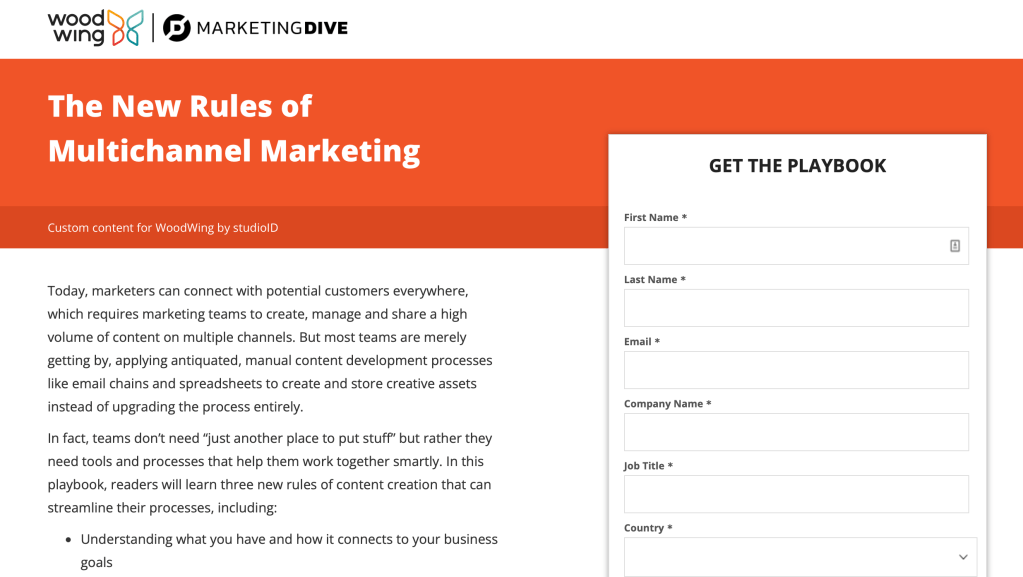
Because they take more resources to produce, sometimes articles can be gated. This means you will have to subscribe or fill up a form before accessing them, allowing the publisher to collect leads in exchange for valuable insights.
Example of a gated page for an article:
Examples of articles:
- Features in Forbes, The Economist or Harvard Business Review.
- Articles by Uni. Professors or Departments: “Proximity Counts: How Houston Dominates Oil Energy“
- Deep Dive Article: “The New Rules of Multichannel Marketing“
Blog Post vs Article: What Are The Key Differences
Now that we’ve defined both formats, let’s dive into their practical differences so you can decide which one is right for your marketing strategy.
1. Writing Style
Blog Posts are often written in a conversational tone and in the first-person. You’ll often notice writers using words like “me, you, yours” to build a connection with the reader. They use short and easy-to-read paragraphs (not longer than 3 sentences). Large blocks of text are avoided and broken up with images, videos subheadings, and sometimes even GIFs or memes. That’s too keep the reader interested.
Structure of a Blog Post
- Headline: Focused on the main keyword and hints at value (e.g. “How to…” or “X Tips for…”)
- Introduction: The writer tries to hook the reader and sets expectations (what will they get from reading this post)
- Main Body: Broken down into H2 and H3 headlines, with practical tips, steps, or explanations
- Conclusion: Quick summary of key points discussed
- Call-to-Action (CTA): Guides readers toward taking an action (subscribe, sign up for a newsletter, book a call)
- FAQs (optional, but I highly recommend it): Adds extra value and helps with SEO, LLMs like to pick up on these FAQs in answering questions
Articles are written by subject-matter experts or journalists in a formal, structured way. They’re more objective and analytical in tone, the writer is rather focused on presenting credible evidence and analyzing stats over casual readability.
Structure of an Article
- Headline: Short and attention-grabbing title (e.g. “AI Adoption in Healthcare Doubles in 2025”)
- Byline: Author’s name and publication date
- Introduction (Lead): Sets the stage, and often starts with a fact, quote, or scene-setting line.
- Main Body: Organized into clear sections or paragraphs. Includes analysis, background, expert opinions, and data. Written in a neutral, fact-driven tone.
- Conclusion: The writer wraps up the discussion, summarizes findings or gives a future outlook.
- Optional Elements: Sidebars (stats, charts, or profiles), pull quotes, references (for academic or industry publications).
In short: Articles explain, analyze, or report so they’re more formal and structured than blog posts.
2. Time Commitment
Blog posts are quick to produce. Usually it takes a writer a few hours to a day from draft to publishing a piece. Longer blog posts that require research can take up to 3 days, but this is more rare. This quick turnaround time makes them great for businesses that want a consistent publishing plan.
Articles require more time to produce, anywhere from several days to weeks. This is because conducting research, interviewing people, fact-checking, and analyzing data extend production timelines.
3. Cost
Blog Posts are considered a relatively inexpensive form of content. You can outsource blog writing to freelance writers or agencies for $50–$300 per post, depending on length and quality. Many companies write blog posts in-house to save costs.
Tip: You can also guest post on someone else’s site to get traffic back to your page. I have accepted guest posts on my website before, but I rarely hardly do so now since most writers auto-generate content and try to add affiliate links.
Articles require higher investment. You can expect to pay anywhere between $500–$2,000+ per article if written by professional journalists, analysts, or industry experts. If publishing in trade journals or magazines, there may also be submission or editorial fees.
4. Level of Expertise
Blog Post: Anyone in your company can write a blog post, including a marketer, a CEO, or even an intern. The goal is on sharing knowledge in a friendly and relatable way – so diverse views are often encouraged.
Article: Requires subject-matter expertise or professional writers with deep subject-matter knowledge. Readers expect to learn from an authority figure with a credible voice, and not an intern.
5. Marketing Funnel Fit
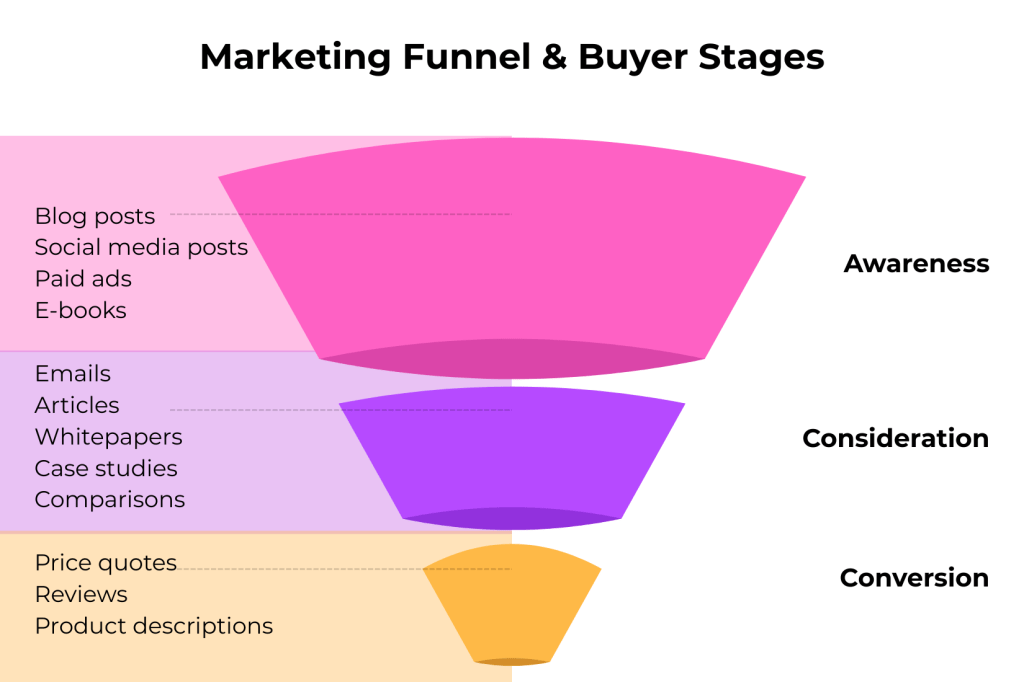
Blog Posts work best at the top of the funnel (TOFU). When posted consistently, they generate traffic and attract readers through search engines. But they’re not always strong sales tools, so they’re best used for building awareness.
Articles are best fit for the middle to bottom of the funnel (MOFU/BOFU). They help you nurture leads, demonstrate thought leadership, and persuade decision-makers of your expertise. Articles are better at converting prospects who are comparing solutions or building trust before purchase. However, they’re not always sales-oriented; they can also be used for PR purposes.
Blog Post vs Article: Quick Comparison Chart
| Feature | Blog Post | Article |
|---|---|---|
| Tone | Conversational, friendly, casual | Formal, professional, analytical |
| Length | 500–1,000 words | 1,000–3,000+ words |
| Time Commitment | Few hours to 1-3 days | 3 days to 2 weeks |
| Cost | $50–$500 | $500–$2,000+ |
| Expertise Needed | Basic writing skills, generalist, SEO research skills | Subject-matter expert or journalist-level |
| Marketing Funnel Fit | TOFU to attract new traffic, build brand awareness, and improve SEO | MOFU/BOFU to build authority, credibility, and collect leads |
So, Which One Should You Write?
Well, it depends on your goals.
If you want to bring in consistent traffic and boost your SEO visibility, I would recommend publishing more blog posts. A tried-and-tested strategy for new businesses is starting with shorter blog posts (500 words), multiple times a week to grow visibility, then increasing the quality and length (1,000 – 1,500 words).
If you’re an established business that wants to build authority, earn buyers trust, or demonstrate thought leadership, invest in well-written articles. You can even run ad campaigns around them and link them to leads generation forms to convert your audience.
As you’ve probably figured out by now, ideally, your content strategy should include both: blog posts to bring people in, and articles to keep them engaged and convinced of your expertise.
To make it easier, here’s a quick visual showing how the main content formats compare in terms of time to produce (in days) and level of expertise needed.
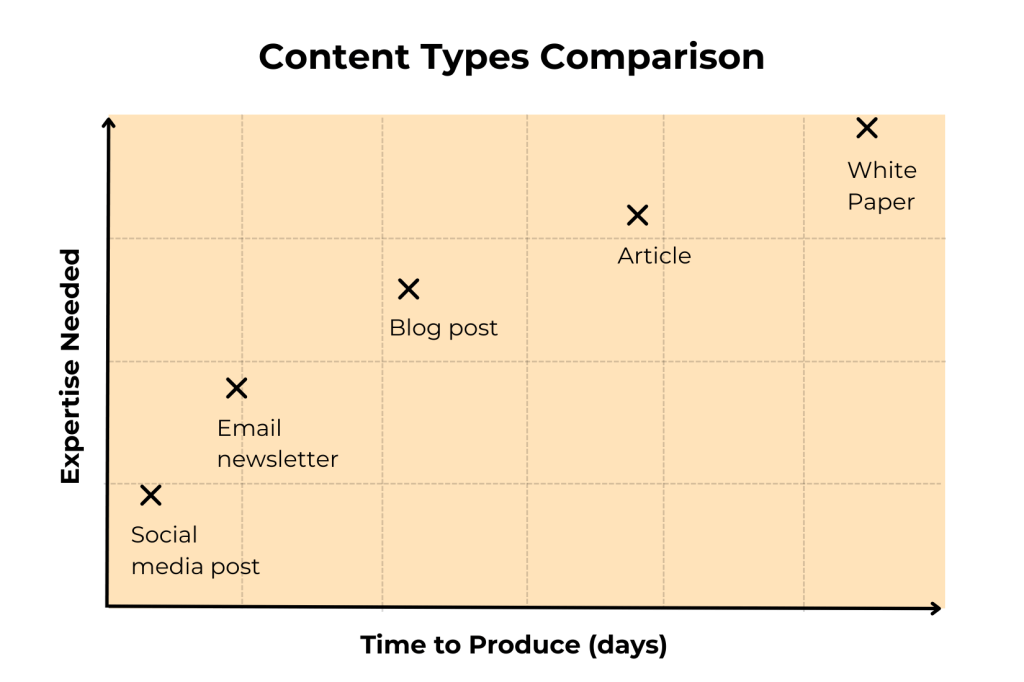
Pro tip: Many brands repurpose their content. You can turn a blog post into an article by expanding on it with deeper research, expert interviews, or data-driven insights. Likewise, you can simplify an article into a blog post for a quick traffic boost and shareable content.
FAQs:
1. Are blog posts and articles the same thing?
No. While both are written pieces published online, blog posts are usually shorter, conversational, and optimized for SEO, while articles are more formal, research-driven, and useful for authority building.
2. Which is better for SEO: a blog post or an article?
Blog posts typically perform better for SEO because they’re keyword-focused and written in a style that matches how people search. Articles can rank too but are often less optimized for quick search visibility, and more for generating leads.
3. Whats the difference between an Article and a White Paper?
Articles are shorter than white papers and need less time to produce. They’re characterized by a journalistic writing style that you will find in magazines or industry websites. A white paper is also more research-heavy, target audience being professionals.
Ready to Create High-Impact Content?
Whether you need blog posts to boost SEO, articles to showcase expertise, or social media posts and newsletters to stay top-of-mind with your audience, we can help you publish quality content. At Studio Scribis we tailor content to your goals, budget, and audience – not just generic AI generated stuff.
Get in touch today for a custom content quote that fits your marketing strategy.

 Studio Scribis
Leave a comment