

Introduction
AI search is here … and it’s changing how people discover content. Tools like ChatGPT, Perplexity, Gemini, and Claude are no longer just curiosities. They’re becoming the go-to resource for millions of users asking everyday questions like: “how to bake a flourless cake”, or “which dress should I buy?” or even asking for detailed travel planning help.
When I looked at my own website stats recently, I was surprised to see top referrers like ChatGPT and Perplexity AI. That’s something new! People didn’t just find my blog through Google search, but through AI chat tools directly linking to my content.
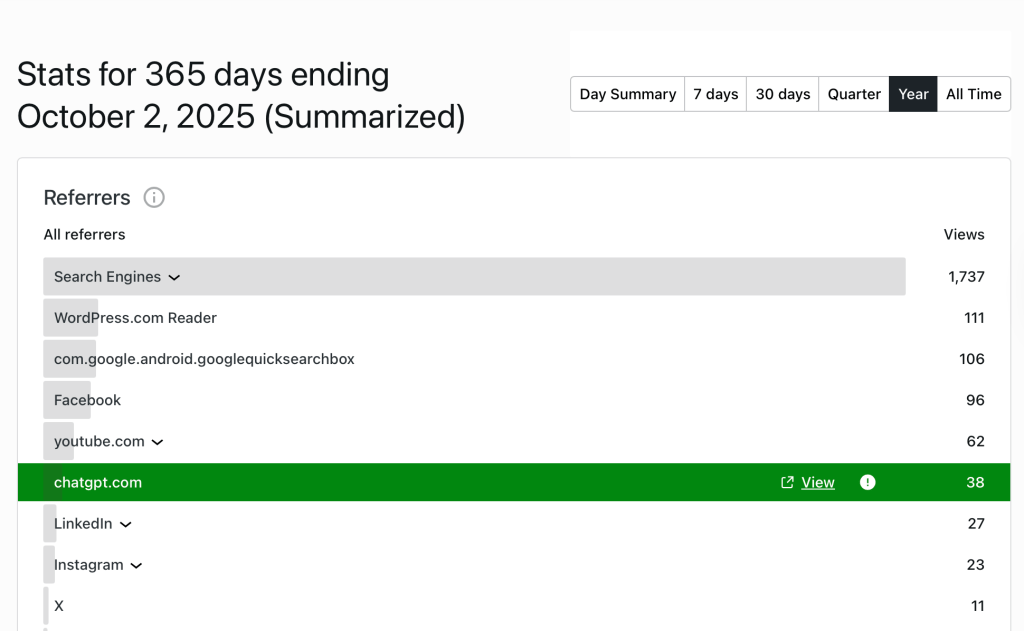
That was my lightbulb moment: AI search isn’t some far-off future, it’s already here, quietly influencing how readers find our blogs and websites.
And I’m not alone in this discovery. According to BBC’s 2025 report, “AI-driven queries are growing faster than traditional Google searches.” What does this mean for us as writers? It means we need to learn how to write blog posts and articles that are visible, relevant, and “AI-search friendly.”
I’ve been writing for and about AI tools for the past several years. From Wonderchat’s chatbot tutorials to AI summarizing tools, I’ve seen firsthand how generative AI is shifting the way people consume content. And now, I’ve seen the numbers: AI is a traffic source in its own right.
In this post, I’ll share what I’ve learned and show you how to adapt your writing for the new age of AI search.
Let’s start with the elephant in the room:
What is AI Search?
AI search is the process of finding answers through generative AI tools (ChatGPT, Gemini, Perplexity, or Claude). Instead of typing a keyword into Google and scrolling through a list of blue links, users ask a question in an AI chat panel. The AI then responds with a direct, personalized and summarized answer.
The key difference? AI search doesn’t just match keywords. It:
- Understands your intent: what the user really means, not just what they typed.
- Scans multiple online sources and formats: blogs, articles, reports, and online databases.
- Delivers an easy to read summary: often with citations or links to the original content.
Think of it this way: Google points you to the bookshelf, while AI search hands you the book, opens it to the right page, and highlights the answer you’re looking for. It’s a very much more personalized search to your own needs.
In summary, this is how AI search differs from traditional Google search:
- Google search: Matches keywords, ranks pages, shows links.
- AI search: Understands intent, scans multiple sources, summarizes answers.
The Rise of Conversational AI Search
#1: ChatGPT as a Search Engine
We know that people ask questions in chatbot platforms. But here’s the surprising part: these AI chatbots can now refer your website and direct people to your site.
In my case, ChatGPT and Perplexity showed up in my own analytics as top referrers over the last year. A clear sign that readers are no longer only finding me through Google or social media posts.
And I’m not alone. A 2025 Adobe survey of 1,000 U.S. respondents found that 77% of people have used ChatGPT as a search engine. Adoption is consistent across age groups:
The study shows that AI search adoption is strong across every age group:
- Gen X: 80% users
- Gen Z: 77% users
- Millennials: 75% users
- Baby Boomers: 74% users
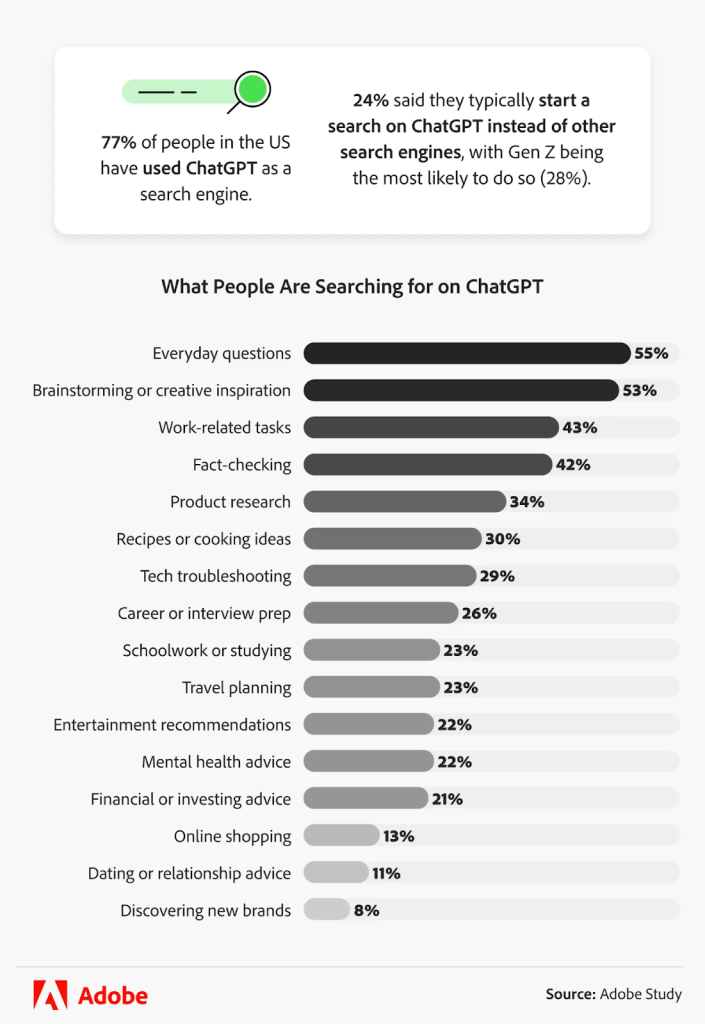
And what are the users searching for?
- Asking everyday questions: 55%
- Brainstorming ideas: 53%
- Seeking financial advice: 21%
- Product discovery: 13%
This shift signals a new reality: people aren’t just searching for information, they’re having a conversation with AI to obtain specific information they need.
#2: People Trust AI Chatbots More Than Ever
Here’s another surprising stat: a 2024 Salesforce study found that 69% of consumers trust AI assistants over human customer service reps.
Just think about that. If users are turning to AI assistants to make purchasing decisions … and they trust the answers more than a human’s … then the content in the answers these AI tools give carries a massive influence on online users.
That’s why AI visibility matters. If your blog post gets picked up, summarized and recommended in ChatGPT’s short answer or Perplexity’s sources, you instantly gain visibility and authority with readers.
#2: Good Content Answers User Questions
One of the biggest writing secrets I’ve discovered is this: the best-performing blog posts are the ones that answer very specific user questions.
- A few years ago, I’d find these questions in forums like Reddit, Quora, or niche Facebook groups.
- Then, I optimized my posts so they ranked on Google when people searched those same questions.
- Now, people are asking the exact same questions to generative AI tools.
Example: Instead of Googling “Best Instagram scheduling tool”, a user will now ask ChatGPT:
“Hey ChatGPT, what’s the best Instagram scheduling tool for agencies?”
If ChatGPT lists my article in its sources, I get the click-through traffic.
That’s why your content should focus on solving problems and answering real questions, the kind people would ask an AI assistant, not just type into Google.
#3: Google’s Search Dominance is on a Decline
Google search still dominates 89% of all online searches. On the surface, you may think that’s a huge market share! But don’t be fooled, Google’s market share is dropping, from previously over 90% dominance.
And since we can’t see an uptick in competitor search engines, the obvious question to ask is: where is that traffic going? You won’t be wrong to assume it’s going to AI search.
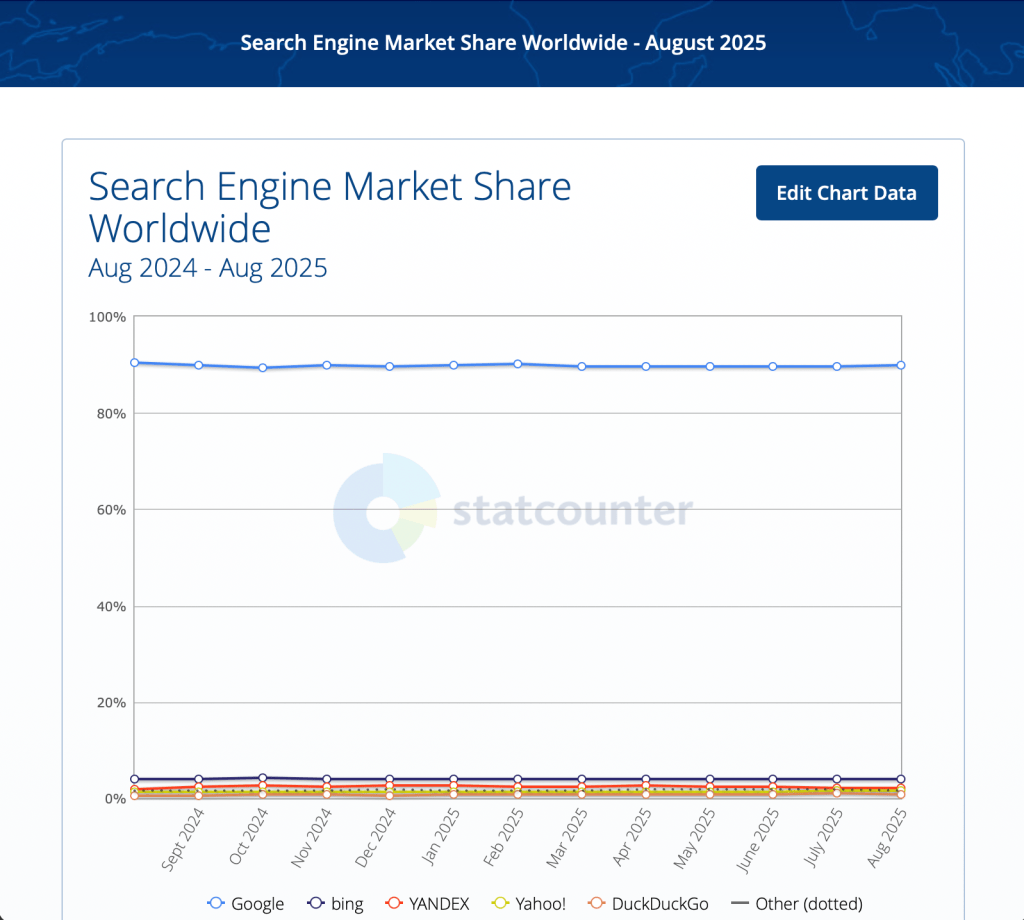
source: Statcounter.com
#4: ChatGPT’s referral traffic grows by 98%
Surveys among Adobe’s US customers conducted from July 2024 to February 2025 highlight customers’ growing trust in using AI for decision-making. The report concluded that AI referrals to travel, retail and banking websites have shown a boom since July 2024.
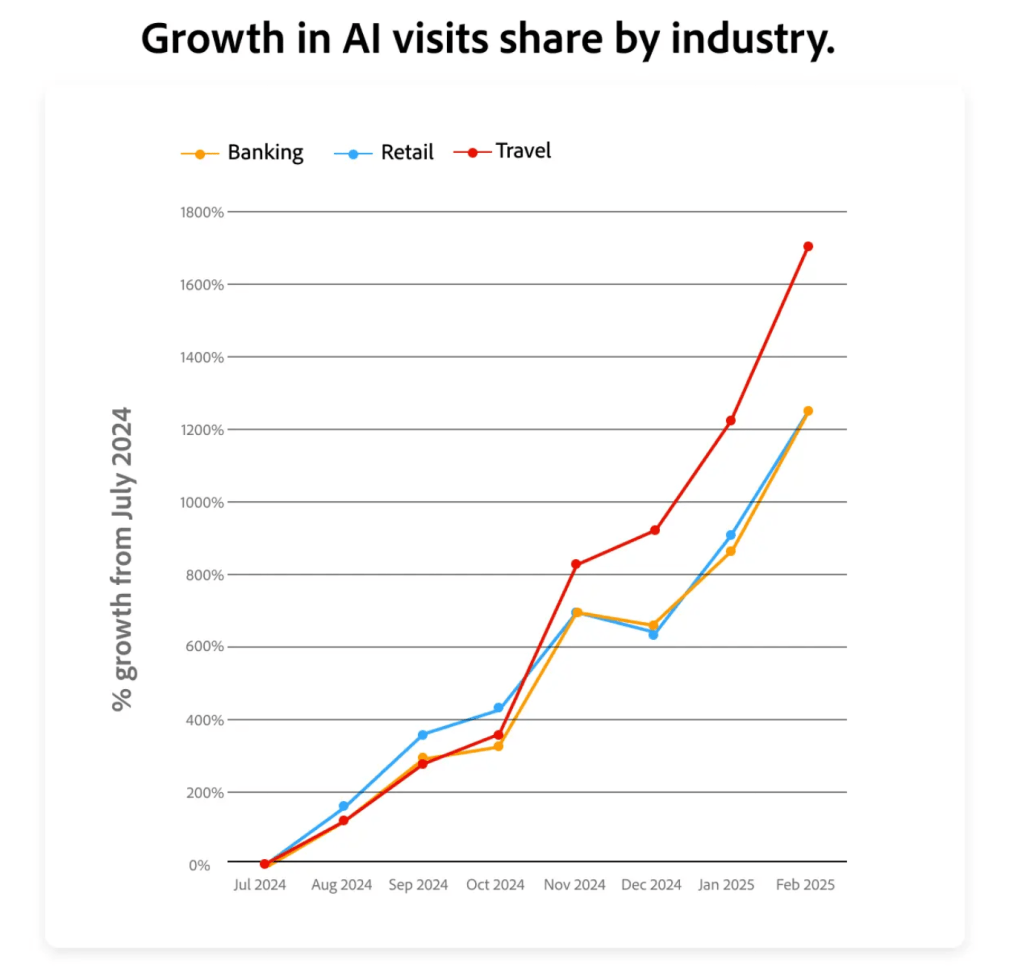
source: Adobe 2025
Tips for Writers: How to Adapt Your Writing for AI Tools Like ChatGPT, Perplexity and Meta AI
We now know that search traffic is increasing on AI chat tools. But is there any way to take advantage of this trend?
Here are my go-to strategies:
1. Write in natural, simple, conversational language:
AI tools prefer content that mirrors how people speak and ask questions and that are easy to skim and extract information. Use simple language, avoid jargons and complicated phrases, and just keep it simple to read.
2. Answer people’s questions in your posts
I started adding sections with FAQ style questions in all my blog posts. This format helps language models pick up on the Q&A style format and reference the content:
- “What is an Article?”
- “Are Articles and Blog posts the same thing?”
- “How long should my Article be?”
3. Show authority in your writing
You can build authority and position your blog as a reputable source by adding links to credible industry reports that include data, charts, analysis and share your personal insights.
Tip: AI models value depth of information + trust + human-written tone.
4. Structure your content for AI scans
AI models also love structured content that’s easy to scan and extract portions of text.
You can optimize your blog posts for AI search by using clear headlines, bullet points, FAQs, lists, and tables.
5. Update your content regularly
Generative AI tools are constantly crawling for fresh content. Outdated posts are less likely to be picked up and recommended to users.
Tip: Make sure you’re updating posts to keep them relevant and visible to AI.
Final Thoughts
Writing for AI search isn’t about following a strict list of rules. It’s about simplifying your messaging: answering user questions, bringing valuable information, and writing with clarity. The difference is that now, instead of just Google scanning your content, AI chatbots are doing it too.
And you can’t solely rely on Google to bring in traffic. While Google still handles 80% of searches, AI tools like ChatGPT, Perplexity, and Gemini are growing fast and offering personalized answers. To improve your visibility, your content needs to work for both.
I’ll continue testing and sharing what works here on Studio Scribis. For now, my advice is simple: write for humans, optimize for AI and SEO, and your search visibility will grow.
FAQs
1. Does AI search replace SEO?
Not yet. But it’s clearly becoming a major source of influence on top of Google search.
Think of it as AI SEO.
2. Should I still do keyword research?
Yes. Keywords are still important, but focus more on user intent and long-form questions.
3. How do I know if my content is AI-visible?
You can test it! Ask ChatGPT the questions your audience would ask. See which sources are cited, then adjust your content accordingly.
 Studio Scribis
Leave a comment