

“Believe nothing simply because you have been told it.
Believe nothing simply because it is spoken by many.”
— Buddha
Why Critical Thinking Is More Important Than Ever in the Age of AI
It’s easy to get lazy and comfortable with so many AI tools, functions, and applications. You get image generators, flight aggregators, online summaries, and even caption generators built into your social media scheduler. All of these are great to have and help you save time!
But you know what’s becoming even more important with the rise of all this AI stuff?
The ability and skill of critical thinking.
It’s so so so underrated. I see many people (especially since ChatGPT and Grok) who just believe the AI tool and forget that they need to double-check all information and summaries these tools produce.
Here’s why that’s a problem…
AI Summaries Often Carry Errors and Bias
When you read a news article summarised by AI tools, it might contain errors or simply show the author’s bias. Because AI often mirrors the bias of the original text.
Stats you need to know:
- Pew Research (2023) found that 6 in 10 adults say they are “uncertain” about whether AI-generated information is accurate, and nearly 40% expect AI to make misinformation worse.
- PNAS (2024) study shows that AI-generated political content can be as persuasive as human-written propaganda, raising credibility risks.
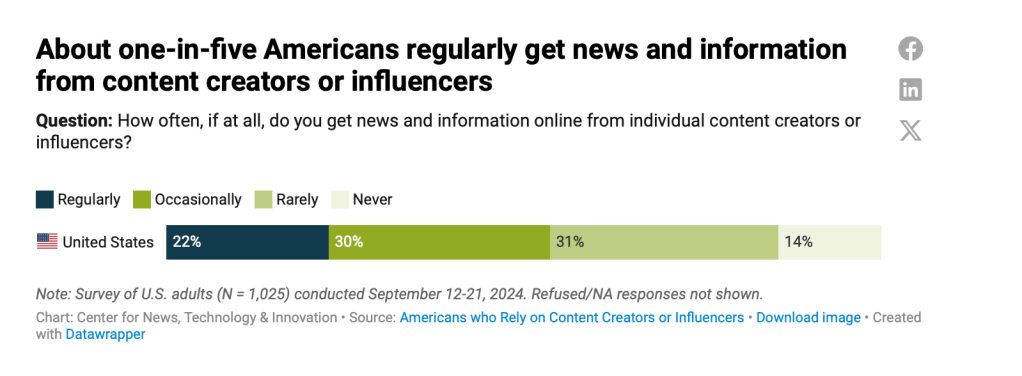
- CNTI’s (2024) research shows that 1/3 of Americans trust content creators and influencers “as much or more” than traditional media, which is exactly why critical thinking is necessary.
Let’s say you’re reading some “news” a content creator posted about the war in Ukraine. It’s a controversial, nuanced topic, and there is no clear “truth” or universally agreed-upon stance. War and geopolitical conflicts are nuanced and complex.
Writers apply bias based on their own personal beliefs and values. It’s just not possible to run away from it.
So when you ask Grok or ChatGPT to “explain” or summarize that content … guess what? They will maintain the original writer’s point of view.
That’s why, you need to read multiple sources before forming an opinion about any subject.
Otherwise, you risk becoming a gullible person who is easy to influence and manipulate, especially by low-quality writers who are being paid to promote certain narratives.
Why You Shouldn’t Trust Even Influencers or Celebrities Blindly
Even your most trusted sources can mislead you. I strongly believe you should be curious, ask questions, and examine both sides of a topic.
Let’s say you’re an avid football fan, and you trust Ronaldo’s opinion on gym or diet tips. But that doesn’t mean you should trust everything he says. If he tells you to invest in gold or crypto – would you do it just because you think he’s trustworthy? People are getting paid to say and endorse a lot of things.
Brands use celebrities and influencers to shape narratives, and even political views. Don’t fall for it.
Key point: Only you are the expert on your own beliefs, values, and perspective. Don’t blindly trust AI, influencers, or online content.
How to Protect Your Critical Thinking in the Age of AI
Being critical is a skill that you can learn by practicing it in your day-to-day life. Here’s a quick checklist:
- Check multiple sources before believing something you see online.
- Look for original studies or primary sources of information.
- Question incentives: Who benefits if you believe this? What is the wider context? Who is this relevant to?
- Don’t rely solely on AI summaries. Use them as starting points to start your own research, not final and true answers.
- Think for yourself. You are the expert on your own perspective, beliefs, and ethics. You do not need to think like the crowd.
Don’t be so quick to trust people, AI, or content you see online.
Always be critical. Always think twice.

 Studio Scribis
Leave a comment