
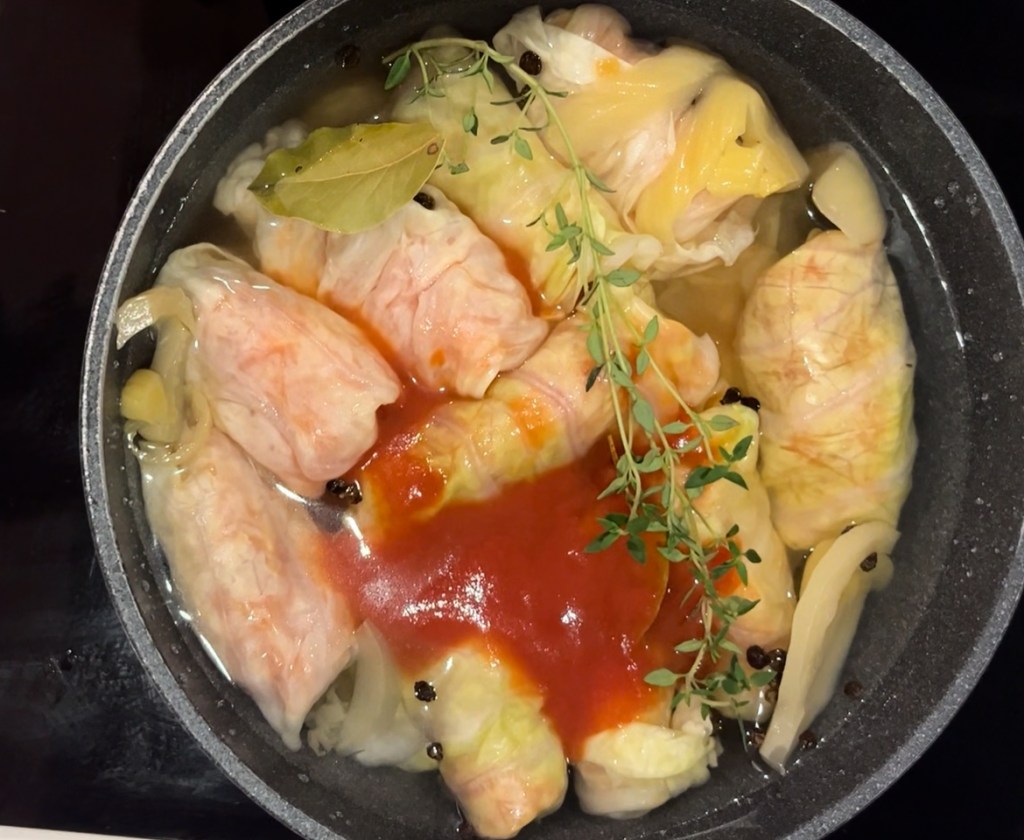
It’s Timeeeeee!🎄Christmas has always been my favourite time of the year. As a child, I used to get so excited once I saw the first snowflakes. It meant I could finally go out and play with snow, sleigh all day, and argue with my sister about who gets to hang which ornament on the tree. And get scolded for eating the chocolate ornaments (saloane).
We learned songs and dances for Santa/Mos Nicolae, went caroling with our neighbours, and made memories that still feel warm today. Growing up in a small village on the Romanian plains was trully magical.
But as an adult living overseas, I can’t bring snow, my childhood friends, or the sleigh with me to Malaysia. What I can bring is the cheer of my childhood traditions. I can put up my (obviously fake) Christmas tree, decorate the windows with snowflakes, and cook the dishes I grew up eating.
Sarmale is one of them. A must-have on any Romanian Christmas table.
VIDEO RECIPE: https://youtu.be/glw2fGosi1U
Why Making Sarmale Overseas Is… an Adventure
I won’t say it’s hard to replicate Christmas recipes abroad, but it’s definitely a challenge. This is my third year cooking the entire Christmas table spread by myself, learning everything through YouTube and trial and error. And yes, I’m still sad that I don’t have an oven to bake my favourite walnut cozonac or poppy seed baigli.
But today I’m showing you something I can make perfectly at home:
The humble and delicious Romanian Sarmale.
There are many versions of sarmale or sarme depending on the region.
Some are baked, some are boiled. Some are huge, some are tiny. Some are boiled in tomato juice, others in sauerkraut brine. There’s no “correct” version, just the one you grew up with.
Today I’m sharing mine.
What’s the Best Liquid for Boiling Sarmale?
After many trials, I love a balanced mixture of:
- 1 part water
- 1 part sauerkraut juice (pickle cabbage juice)
- 2-3 tbsp tomato paste (passata) or juice
It shouldn’t be too dry like a gravy or too soupy, just right.
And here’s a secret I discovered: they taste better the next day.
I cook them a day before, store the entire pot in the fridge, and reheat just before serving.
Fermented cabbage needs time to release its full flavour, so trust me a little bit of patience pays off.
Do You Need to Pickle Your Own Cabbage?

Yes. Absolutely yes. Its really easy and cheap.
If you can, start 4 weeks before.
If you’re rushing, 4–7 days is still enough to get a sour flavour. If you don’t have time, make them with fresh cabbage leaves, softened in hot boiling water.
I do it in small batches for 2–4 people, and it’s easier than you think.
How I Pickle Cabbage Leaves for Sarmale (Small Batch)
You’ll need:
- A container with a tight lid (glass, jar, or even sturdy plastic)
- 1 medium cabbage (with tight leaves)
- Rock salt or sea salt (not iodised table salt)
- Water for the brine
- Optional: cumin seeds, mustard seeds, and some people add 1 green chili pepper. I prefer it simple.
Homemade Pickles Cabbage Leaves (Method):
- Core the cabbage root (cut a triangle shape at the bottom).
- Boil water in a deep pot.
- Place the cabbage in bottom-side down, submerged in water
- Boil for 20 minutes, flipping every 5 minutes on all sides
- Remove and let cool 10 minutes.
- Gently remove the leaves one by one.
- Roll or fold the cabbage leaves and pack them tightly in your container.
- Boil water with salt (1 cup water : 1 tbsp salt).
- Pour the salty water brine over the cabbage leaves.
- Add cumin or mustard seeds if you like.
- Press leaves down and let cool.
- Seal the container and keep it on the counter top at room temperature (4–7 days).
- Open daily to aerate. If needed, top up with more brine.
- After day 4–7, transfer to the fridge.
- Open it once a week to aerate (if you find mold, or fuzzy stuff please throw the whole thing away. If you only see whiting on top, not slimy, that’s okay. Its just lactic acid from fermentation. You can still use it.
How To Know The Cabbage Has Fermented?
You can taste it. It should taste sour, and slightly salty (depending on how much salt you have added)
You can touch it. It should be soft, bendy and light yellow in color.
Check the liquid. It should be slightly murky and not fully transparent.
Can I Use Fresh Cabbage Leaves?
Yes. I’ve done it many times.
But your broth won’t be as flavourful. To fix this, add something fermented:
- A handful of grated sauerkraut + juice
- OR Chinese pickled mustard greens (“kiam chai”) – works amazingly well in this recipe
- Please don’t use vinegary pickles like cucumbers or relish they ruin the taste :) I do not approve of those.
Now that we have the cabbage ready, let’s start rolling the sarmale!
How to Make Sarmale (Ingredients + Filling)
I like to start with the filling mixture.
Filling Ingredients:
- 250 grams minced pork (I don’t like it to be too fatty, more lean is best could be gross)
- 25 grams short grain rice (I use jasmine, or Calrose Japanese short grain rice). If you use long grain like Basmathi the grains will poke out, looking weird).
- 1 medium white onion chopped to small bits
- 2-3 tablespoons tomato passata or juice
- 2 teaspoons Hungarian paprika (sweet, not smoked)
- 1 tablespoon whole black peppercorns
- 1-2 teaspoons of salt (careful here, you need to adjust based on how salty your cabbage is)
- 1 tsp thyme leaves fresh or dry (1 bunch). You can substitute thyme with dill (for a Serbian twist!)
- 2 bay leaves
- Optional: 1 egg to bind the ingredients together (I have made it without and its still great)
Tip: The ratio of rice to meat I like to use is 10%. If you have 250 grams of meat, use 25 grams of rice. The purpose of the rice is to act as a filler, and to make the meat rolls softer as they cook. Too much rice will dilute the flavor.
My Recipe for the Sarmale Boiling Liquid
- 1 part water
- 1 part cabbage brine
- 2–3 tbsp tomato juice/paste
Step-by-step: Making the Filling
- In a pan with 2 tbsp olive oil add the chopped onion, and fry it till soft and caramelised.
- Add 3 tbsp tomato paste, dried thyme leaves (1 pinch), and paprika.
- Stir and take off the fire. Let it cool to room temp.
- In a separate bowl, add the onion mixture, the rice and the meat + 1 teaspoon of salt.
- Mix it well to combine with your hand to. You can add 1 egg to bind the mixture. But I’ve cooked it without the egg and turns out well enough. Just need to massage the meat longer to develop the protein binds.
Preparing the Cabbage Leaves:
- Cut each large leaf in half and remove the thick core (or any hard edges). This will make them more flexible and easy to fold and roll.
- Smaller leaves dont need to be cut.
Now let’s roll the sarmale!
How to Roll Sarmale:
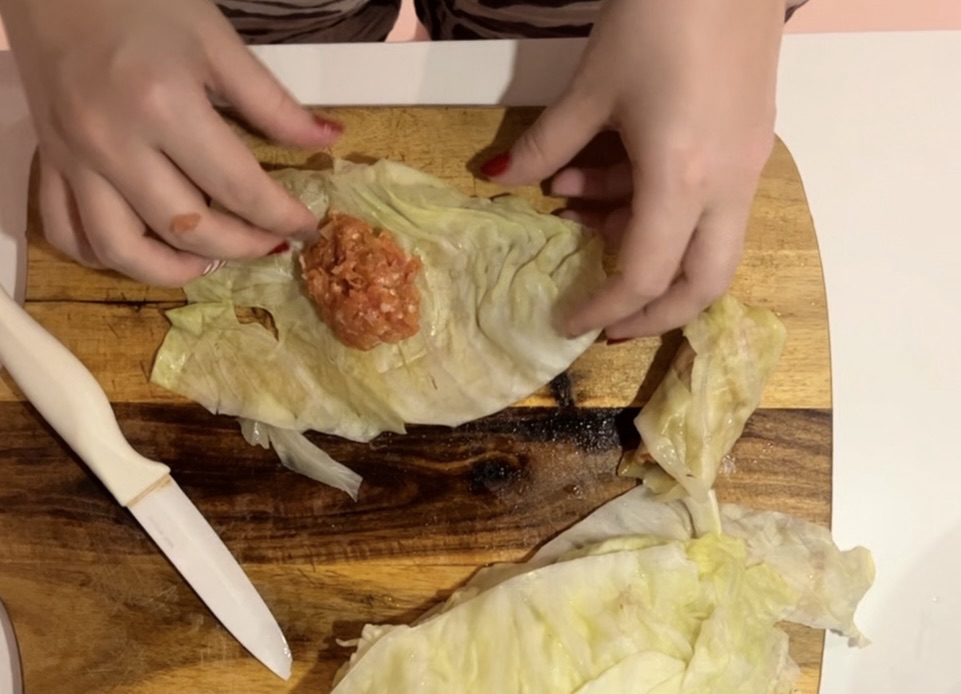
- Take one leaf, place it flat on your left palm.
- Add 1 tablespoon of meat filling in the middle.
- Fold the edges inward to create a dumpling.
- The easiest way is to fold the right and left side first.
- Then the top side lay over and roll it once or twice.
Helpful tip: If the edges don’t stick, tuck the ends into the roll with your finger so it stays tight while cooking. This can happen if you’re using fresh leaves which are more resistant to folding.
Image for illustration:
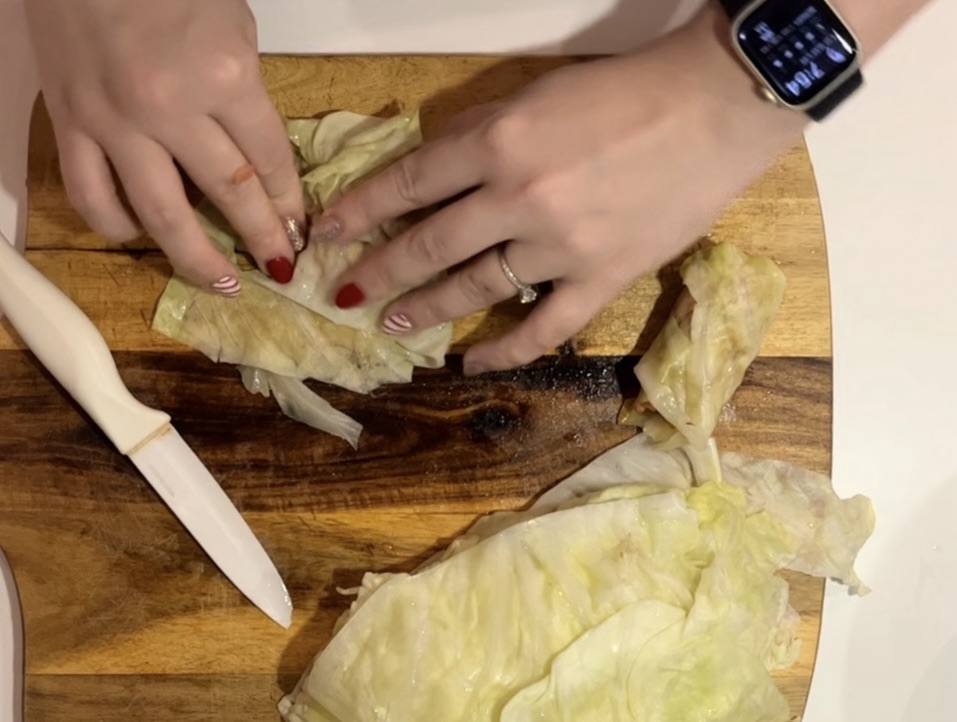

Don’t stress if a few meat rolls look “ugly.” The broken leaves or messy rolls go at the bottom of the pot, so they melt into the broth and make it taste even better.
How to Cook Sarmale
Choose a deep pot, casserole, or claypot that has enough height to hold 2–3 layers of rolls.
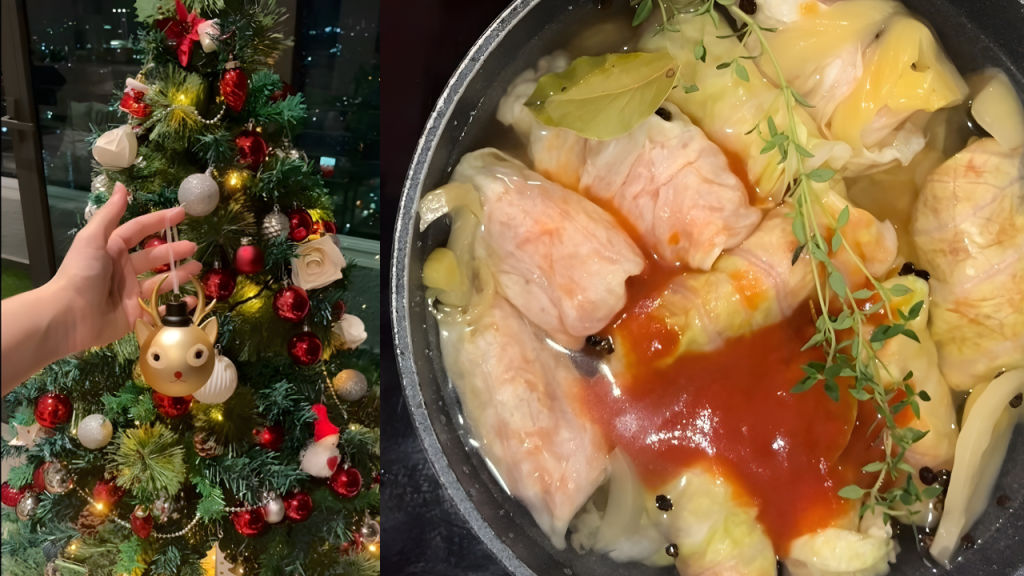
We need to assemble this dish in layers:
Base layer: Add a layer of chopped cabbage leaves at the bottom (use the broken, leftover, or small pieces).
Layering:
- Add your first layer of sarmale. Place the larger ones at the bottom. And the ones you consider “ugly”
- Add another thin layer of chopped cabbage. Sprikle some dry thyme and peppercorns
- Add a second layer of sarmale, then top again with chopped cabbage.
Seasoning:
Add 2 bay leaves, more peppercorns, and a bunch of fresh thyme leaves.
Add the liquid:
Pour your mixture of water + cabbage brine + tomato juice/paste just enough to fully cover the rolls.
They should be submerged, but not swimming.
Top layer:
Add a final “blanket” of cabbage leaves on top. This keeps the rolls from breaking apart as they boil.
Cooking:
Cook on low heat, covered, for 1.5–2 hours.
Keep an eye on them so they dont dry up, and top up with water when needed.
Taste and adjust the seasoning with salt, fresh ground pepper, and some vegeta (dried vegetable seasoning).
The smell in your house will be absolutely AMAZING! :)
How to Serve Sarmale for Christmas
I like to serve them the next day for the best flavour.
On a plate add:
- 2–4 sarmale
- A ladle of broth
- A generous dollop of sour cream (smântână or crème fraîche). You could use greek yoghurt and a bit of lemon juice.
- Bread, mămăligă (polenta), or just eat them plain. they’re delicious!
The only challenge is keeping enough fermented cabbage in stock to make them more than once a year.
I also filmed a full video recipe so you can watch the entire process step-by-step.
This is my Christmas tradition …
Sarmale will always taste like childhood to me, no matter where in the world I am. Making them overseas has become my own tradition: a mix of nostalgia, improvisation, creative hunting for substitutes and a whole lot of patience.
If you try this recipe, I hope it brings the same comfort and joy to your Christmas table. ❤️
 Studio Scribis
Leave a comment